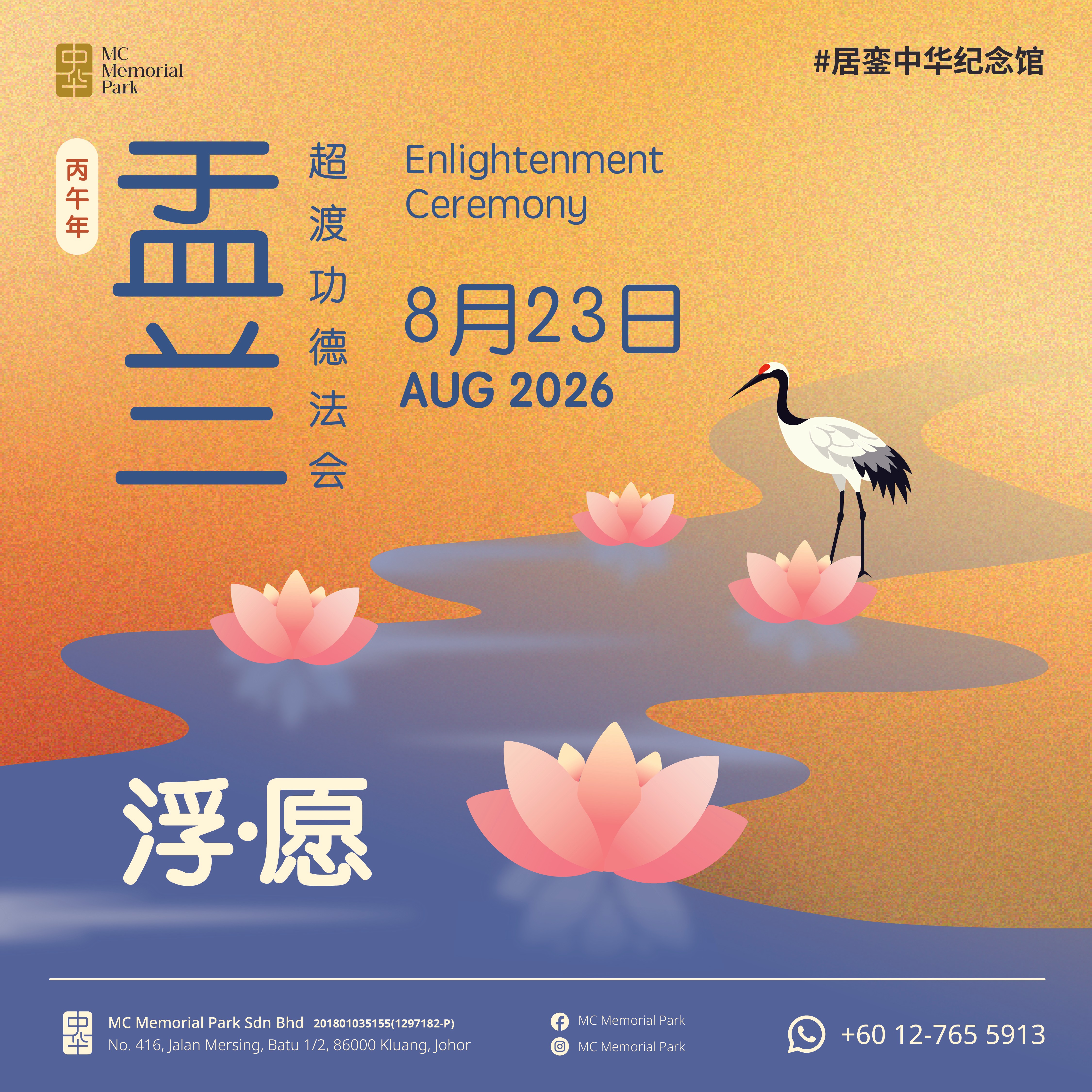




During the seventh lunar month, many Chinese families in Kluang and Johor begin seeing terms such as Zhongyuan, Ullambana, and memorial prayer events. For families attending for the first time, the questions are usually practical: What does the event mean? Do we need to attend? What should we prepare? How should we participate respectfully?
This guide explains the meaning, common flow, preparation checklist, and etiquette for Ullambana memorial prayer events, especially for Malaysian Chinese families who want to honour tradition without feeling confused by the details.
What Is an Ullambana Memorial Prayer Event?
Zhongyuan and Ullambana are often discussed together in Chinese communities. The details may differ by family background, dialect group, and religious belief, but the core meaning is remembrance, filial piety, and prayers or blessings for departed loved ones.
A memorial prayer event held at a memorial park, temple, or religious venue is usually led by a religious team. Families may participate in chanting, offerings, lighting, dedication, or remembrance activities depending on the arrangement. It should be understood as a respectful memorial practice, not as a guaranteed religious outcome.
Why Does This Matter to Chinese Families?
For many Malaysian Chinese families, memorial customs are not only religious practices. They are also a way to preserve family memory and help younger generations understand the meaning of honouring ancestors.
It gives families a shared time for remembrance.
It helps descendants understand family continuity.
It provides an orderly setting for prayer and remembrance.
It supports families who want guidance during seasonal worship periods.
What Should Families Confirm Before Attending?
1. Date, Time, and Venue
Confirm the date, arrival time, venue, parking, and entry arrangements. If elderly relatives are attending, allow extra time for transport and rest.
2. Registration Requirements
Some events may require registration of the departed person’s name, family representative details, or memorial tablet information. Always follow the organiser’s instructions.
3. Permitted Offerings
Different venues may have different rules for flowers, incense, food offerings, candles, or paper items. It is better to ask first instead of bringing too many items.
4. Who Should Attend
Not every family member has to attend. A main family representative is usually sufficient, although families may attend together if they prefer.
Common Flow on the Day
The exact programme depends on the organiser and religious arrangement, but families can usually expect a few common stages:
Arrival and confirmation of registration or tablet details
Participation in chanting, prayers, offerings, or dedication
Quiet observance in the designated area
Completion of worship or remembrance according to venue instructions
Families who are unsure can ask MC Memorial Park’s team before the event so they understand what to expect.
Common Mistakes to Avoid
Mistake 1: Thinking You Must Know Every Ritual
Many younger family members are unfamiliar with memorial prayer events. It is enough to be respectful, follow instructions, and ask when unsure.
Mistake 2: Bringing Too Many Offerings
A memorial venue needs to remain clean and orderly. Suitable, simple, approved items are better than excessive preparation.
Mistake 3: Treating Attendance as a Family Obligation
Different families have different beliefs. Participation should be based on family consensus rather than pressure.
Mistake 4: Forgetting Elderly Family Members’ Needs
Events may involve waiting or standing. Plan transport, rest time, drinking water, and seating needs in advance.
Frequently Asked Questions
1. Is attendance compulsory?
No. Attendance depends on the family’s beliefs, traditions, and preferences. Families may first understand the meaning, then decide together.
2. What information may be needed for registration?
The organiser may request the departed person’s name, contact details, or tablet information. Requirements vary by event.
3. Can families bring offerings?
Ask the organiser what is allowed. Rules may differ for incense, flowers, food, candles, and paper offerings.
4. What if younger family members do not know the process?
They can follow the organiser’s guidance. Respectful behaviour matters more than knowing every ritual perfectly.
5. How is this different from Qingming worship?
Qingming is usually family-led worship, while an Ullambana memorial prayer event is commonly organised as a shared religious or remembrance programme.
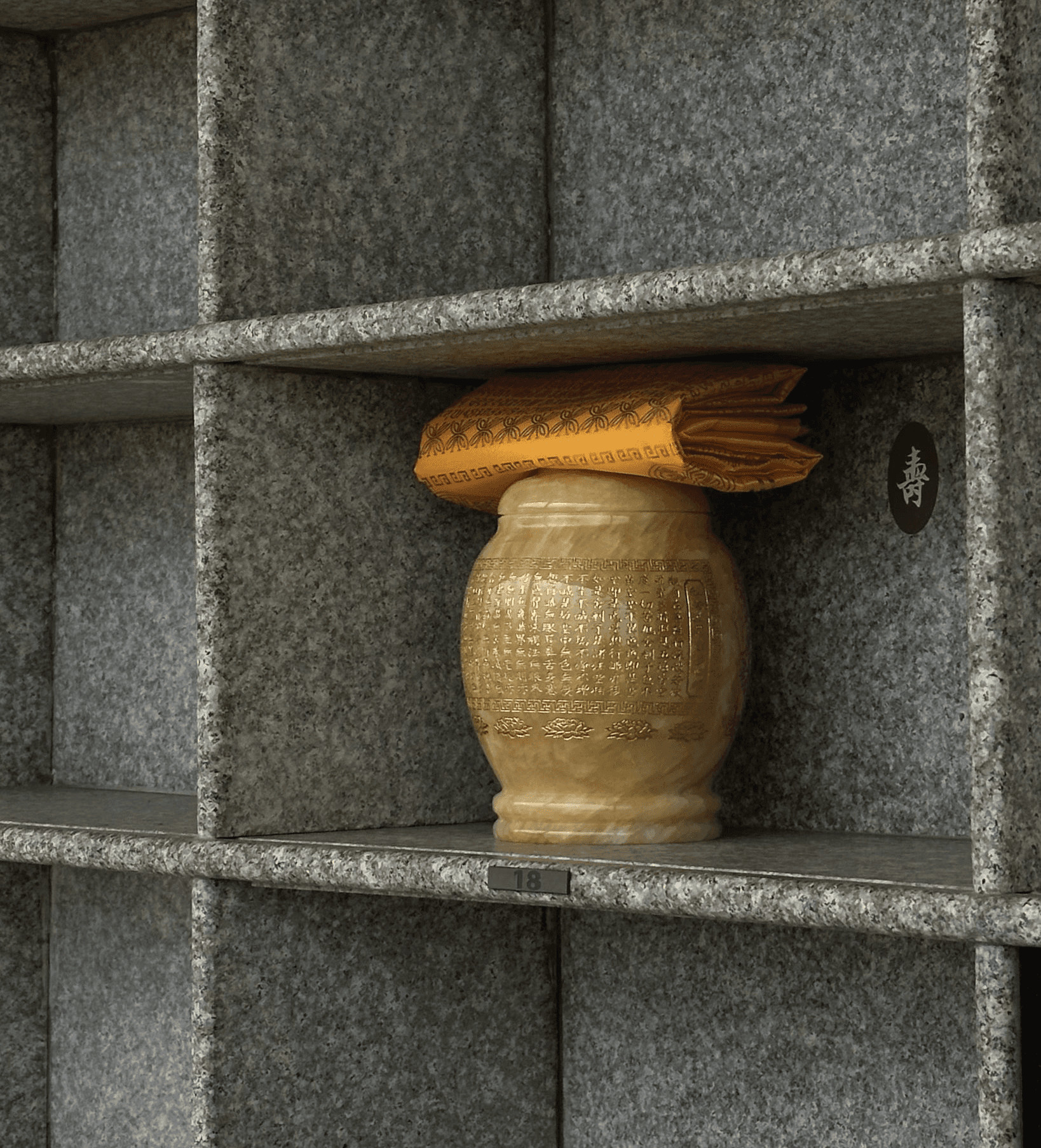
6. Is it suitable for families whose loved one’s ashes are placed in a columbarium?
It can be convenient for families who wish to remember their loved one in a fixed memorial setting, but participation still depends on family preference.
Conclusion: Tradition Feels Easier When the Process Is Clear
An Ullambana memorial prayer event does not need to feel complicated. When families understand the meaning, confirm the practical details, and participate respectfully, the event becomes a calm way to remember loved ones and preserve family tradition.
Related Reading
Can You Eat Funeral Gratitude Candy?
Service Page: Columbarium and Memorial Placement
If your family would like to understand memorial prayer events, columbarium arrangements, ancestral tablets, or funeral services in Kluang, MC Memorial Park can explain the available options in a clear and respectful way.
24-Hour Funeral Services Hotline: 012-7975913
Office Hotlines: 012-7655913 / 07-7738899
Official Website: www.mcmemorialpark.com